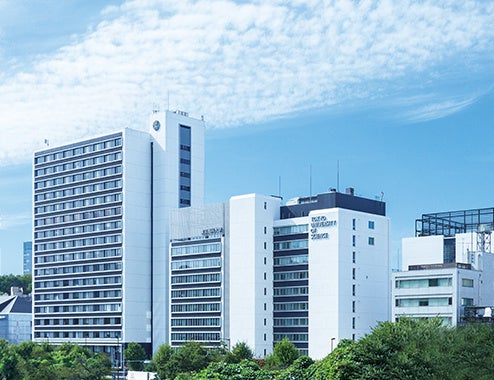
On July 9, 2026, it was announced that the research project 'Sodium-Ion Battery Technology Development,' led by Professor Shinichi Komaba of Tokyo University of Science, has been selected for the 'Innovative Battery Technology Development and Advanced Analysis' program (hereinafter referred to as the program) by the New Energy and Industrial Technology Development Organization (NEDO), a Japanese national research and development agency. The proposal was jointly submitted with GS Yuasa Corporation, Musashi Energy Solutions Corporation, Kuraray Co., Ltd., TOAGOSEI CO., LTD., MU Ionic Solutions Corporation (jointly implemented with Mitsubishi Chemical Corporation), Tohoku University, The University of Tokyo, Waseda University, Tokyo University of Agriculture and Technology, Gunma University, The Institute of Scientific and Industrial Research, Osaka University, and the National Institute for Materials Science (NIMS). The consortium will conduct technological development toward the practical application of next-generation sodium-ion batteries.
Batteries are a critical technology for achieving carbon neutrality by 2050 and for the digital and electrified society. Demand for batteries is expected to grow across diverse applications such as electric vehicles, power supply-demand balancing, and data centers. However, lithium-ion batteries are currently widely used, and risks related to the procurement of their constituent materials have become apparent.
Sodium-ion batteries represent a next-generation battery technology originating in Japan, first demonstrated in a stable, rare-metal-free configuration in 2011 by Shinichi Komaba, a faculty member at Tokyo University of Science. Since they do not rely on resources with supply risks—such as lithium, cobalt, and graphite—they are expected to contribute to the diversification and enhanced autonomy of battery supply chains.
Professor Komaba has, over the past 15 years, steadily accumulated academic knowledge and foundational technologies related to sodium-ion batteries, supported by continuous public funding for fundamental research, including the Japan Society for the Promotion of Science’s Advanced Next-Generation Research and Development Support Program (2010–2013), the Ministry of Education, Culture, Sports, Science and Technology’s Elements Strategy Initiative (2012–2021), and the JST GteX Project (2023–2027). Additionally, he has conducted diverse collaborative research with companies aimed at social implementation, including through the JST A-STEP Project (2014–2017).
For this program, a joint proposal was made based on the accumulated technological foundation, integrating battery cell manufacturers, battery component manufacturers, universities, and national research and development institutions. Moving forward, under NEDO’s commission, the consortium will begin efforts toward the practical application of next-generation sodium-ion batteries by collaboratively advancing development from materials to cell design and mass production process evaluation.
FACT BOX
- Source: PR TIMES
- Category: Partnership