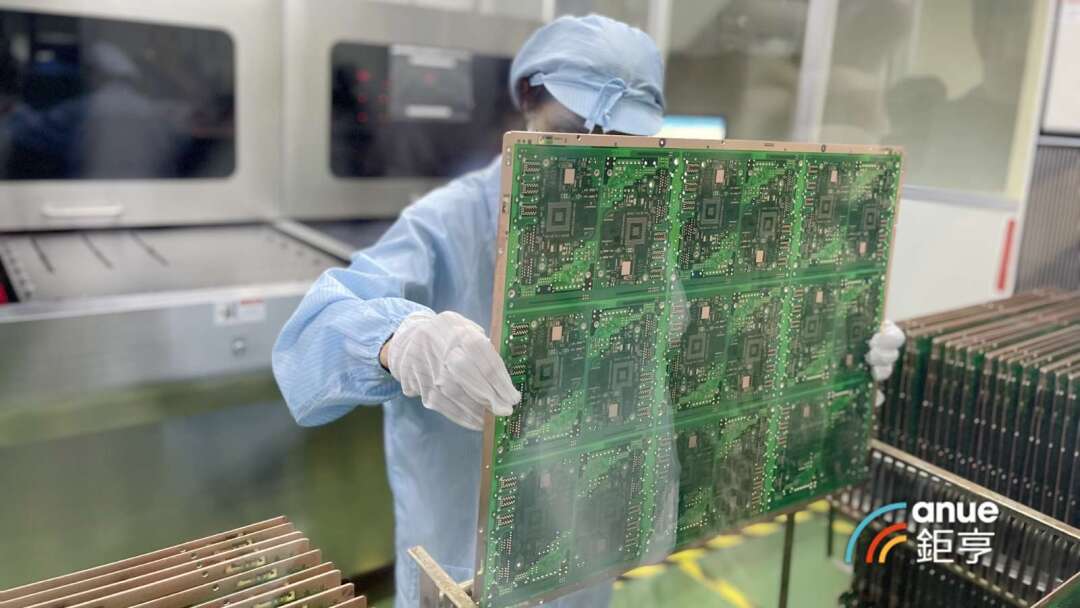
Benefiting from expanding demand for AI infrastructure such as AI servers, high-speed networking, and memory, there has been strong growth in demand for advanced products like substrates, High-Density Interconnect (HDI), and High Layer Count (HLC) boards. Additionally, ongoing tight supply of high-end materials combined with rising raw material costs has led to sequential quarterly price increases across PCB products.
The Taiwan Printed Circuit Board Association (TPCA) reported today (24) that Taiwan’s PCB manufacturing sector demonstrated strong growth momentum in Q2 2026, achieving a total domestic and overseas output value of NT$279.1 billion, a year-on-year increase of 27.9%. Cumulatively, the first half of 2026 reached NT$524.7 billion, up 23.9% compared to the same period last year. The overall outlook for 2026 is significantly stronger than the past two years, with full-year output expected to exceed NT$1 trillion for the first time at NT$1.1365 trillion, representing a 24.2% annual growth.
According to TPCA, this growth momentum stems primarily from sustained expansion in demand related to AI infrastructure—specifically AI servers, high-speed communications, and memory—which has driven increased demand for high-end PCB products such as substrates, HLC, and HDI. Meanwhile, persistent tightness in high-end material supplies, coupled with rising raw material costs, has pushed PCB product prices upward on a quarterly basis.
From a product category perspective, most PCB types showed year-on-year growth in Q2 2026, with AI-related products leading the way. Substrate revenue grew 36.7% year-on-year, supported by continued demand growth for AI servers, HPC, and high-speed communication chips, along with constrained supply pushing substrate prices higher and driving output growth. HDI benefited from growing demand in AI servers, low-orbit satellites, and automotive electronics, supporting shipments of high-end HDI products. However, weaker demand in smartphones and personal computers partially offset this growth, resulting in a 28.4% year-on-year increase. Multilayer boards saw significant output growth due to rising demand from AI servers, high-end networking, and memory modules, which increased the share of high-layer-count, high-frequency, high-speed PCBs, leading to a 47.6% year-on-year growth rate.
Flexible circuits (FPC) recorded a modest 1.3% year-on-year growth, impacted by weak demand in smartphones and laptops, resulting in a flat market performance overall. However, the ramp-up in volume shipments of AI smart glasses is beginning to support demand for flexible and rigid-flex boards. On the application side, the global automotive market is gradually recovering, and some automakers are re-strategizing around gasoline and hybrid vehicles, boosting related order demand. Another highlight is the rising demand for AI smart glasses, emerging as a notable new application market beyond AI infrastructure.
With expanding AI applications and the rise of new use cases such as AI glasses and satellite communications, the second-half 2026 domestic and overseas output value of Taiwan’s PCB industry is expected to grow 24.5% year-on-year to NT$611.8 billion, bringing full-year output to an estimated NT$1.1365 trillion, up 24.2%. Looking ahead to the second half of 2026, the industry must carefully navigate four uncertainties: rising component costs suppressing end-market demand, continued tightness in key PCB materials, geopolitical impacts on trade environments, and potential risks from AI infrastructure investment returns and supply-demand volatility. Despite these challenges, ongoing AI infrastructure investment and the price effect driven by sustained high-end material shortages are expected to maintain a 'volume-and-price growth' pattern. Overall, Taiwan’s PCB industry is poised to continue its dual-growth trajectory.
In the first half of 2026, Taiwan’s PCB materials sector achieved a domestic and overseas output value of NT$271.6 billion, up 38.6% year-on-year. Growth was primarily driven by high-frequency, high-speed copper-clad laminates (CCL) within rigid board materials, while key inputs such as glass fabric and copper foil remain in short supply. Due to capacity constraints and rising raw material costs, material prices have gradually increased, further boosting the overall output value of the PCB materials industry. Taiwan’s PCB equipment sector recorded an output value of NT$46.08 billion, up 27.8% year-on-year, with mechanical drilling equipment and drill bits showing the strongest growth. Overall, Taiwan’s PCB supply chain has benefited from rapid expansion in demand for AI servers and high-speed networking, driving demand and development across the entire ecosystem.
Since the second half of 2025, rapidly growing demand for AI servers and high-speed networking has tightened supply and demand for PCBs, substrates, and key materials. In 2026, the shortage situation has not improved and has instead expanded—from high-end materials such as Low CTE, Low Dk2, and HVLP4—to include CCL, high-end PCBs, ABF substrates, process equipment, and consumables. Even certain mid-to-low-tier materials and standard CCL grades have begun experiencing extended lead times or price hikes.
As of Q2 2026, high-end materials, PCBs, substrates, and specific process equipment remain in tight supply. PCB manufacturers, substrate makers, material suppliers, and equipment vendors have all actively expanded capacity, with some new production lines expected to come online between 2027 and 2029. However, given the rapid pace of AI demand growth, continuous specification upgrades, and the time required for customer qualification and yield improvement, new supply will struggle to fully close the gap in the short term. Supply chain tightness is therefore expected to persist at least until 2027.
The 2026 PCB industry output is poised to reach a new record high. The rapid expansion of AI infrastructure demand is not only boosting PCB manufacturing but also rippling upstream to materials and equipment sectors. AI is not just another cyclical upswing—it is reshaping the value distribution within the PCB supply chain. As technology evolves, the competitive positions of existing suppliers may shift, creating opportunities for new entrants. The ability to keep pace with each generation of AI platform upgrades and convert technological changes into new product value will be key to sustaining Taiwan’s competitive advantage in the global PCB supply chain.
FACT BOX
- Source: PR Times
- Category: Survey
- Products / services: PCB / HDI